Sub-Slab Depressurization in Eau Claire, WI
Sub-slab depressurization (SSD) is the most common radon mitigation technique in Wisconsin basements. The method is mechanical: a fan creates a small pressure differential under the slab, soil gas flows up a sealed pipe instead of through slab cracks, and the gas is exhausted above the roof.
System anatomy
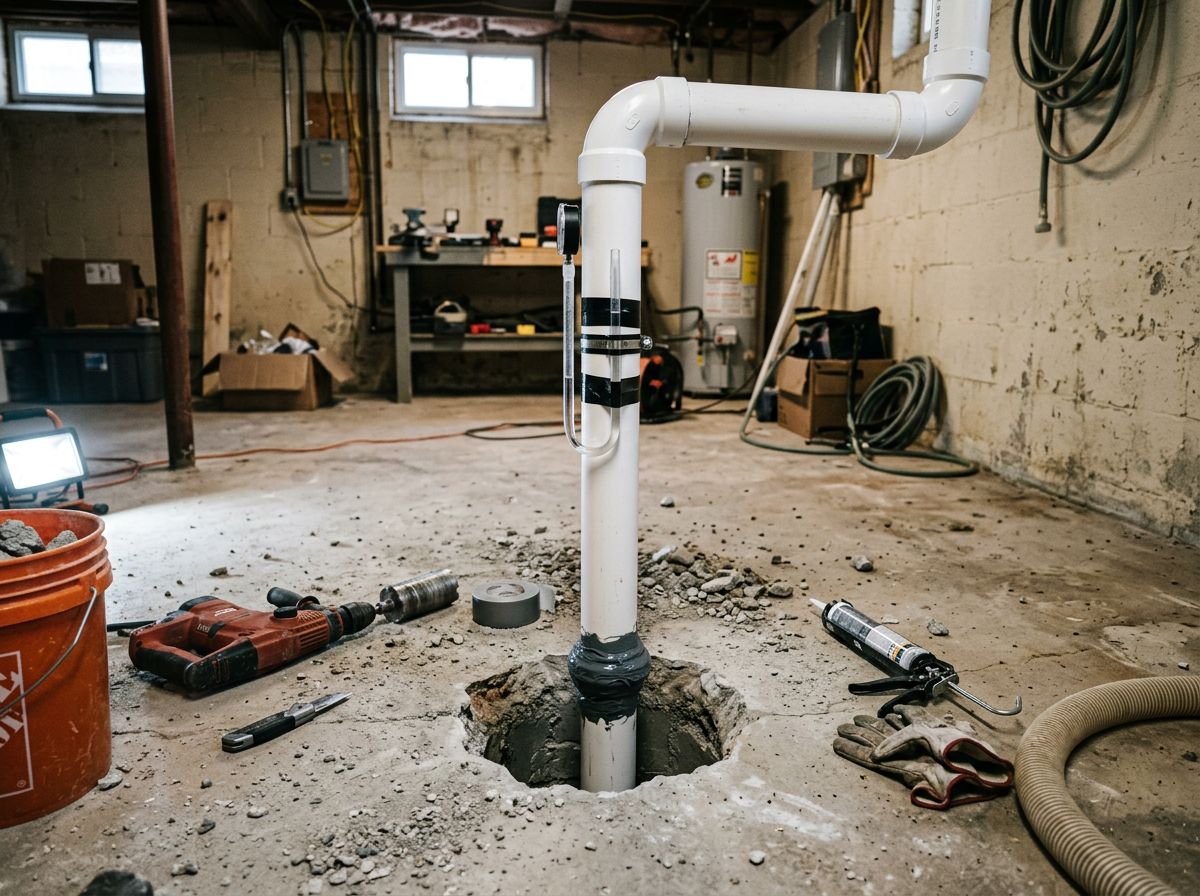
- Suction pit. A 4–5" core hole through the slab, with a small void scooped out below to widen the influence of the fan.
- Suction pipe. 3" or 4" PVC, sealed at the slab penetration, routed up through a closet, mechanical chase, or up the exterior wall.
- Mitigation fan. Mounted in non-habitable space — attic or exterior wall. Sized to the home's slab area and subgrade conditions.
- Discharge stack. Continues above the roofline, terminates 12" above the eaves and 10' from any operable window per EPA / ASTM E2121.
- Manometer. A simple U-tube tube on the visible riser. If the fluid is offset, the fan is pulling. If it's level, the fan has failed.
Why SSD over other methods
Crawl space encapsulation, basement pressurization, and HRV-based approaches all exist and have niche applications, but for the typical Chippewa Valley basement on poured concrete or block walls, SSD is the most predictable approach. It works regardless of how leaky the slab is, doesn't depend on a tight building envelope, and is straightforward to repair and inspect 10 years later.
Subgrade matters
The biggest single variable in a successful SSD install is what's under the slab. Older Eau Claire and Chippewa Falls homes often sit on a thin layer of poorly-graded fill or compacted sand. Newer subdivisions in Altoona and Lake Hallie are often on washed pea-gravel subbase, which is ideal for SSD — radon influence can extend 20–30 feet from a single suction point.
Crawl spaces
Homes with full or partial crawl spaces use a related approach called sub-membrane depressurization: 6 mil polyethylene is sealed across the crawl floor and to the foundation walls, and the radon fan pulls from beneath the membrane. Same fan, same discharge, different "slab."
Need a radon test or mitigation system in the Chippewa Valley?
Same-week appointments are typical. Real-estate-deadline tests can usually be slotted in 24–48 hours.
Frequently asked questions
What does sub-slab depressurization actually do?
A radon fan creates a slight negative pressure under the basement slab, lower than the air pressure inside the house. Soil gas — including radon — flows up the pipe and is discharged above the roofline instead of leaking up through cracks in the slab.
Why doesn't sealing cracks alone work?
Slab cracks, sump pits, expansion joints, and plumbing penetrations are too numerous to seal completely. Sealing reduces the flow path but doesn't eliminate it. Active depressurization makes pressure under the slab work in your favor regardless of how leaky the slab is.
How is the suction point chosen?
The goal is to put the suction pit somewhere that can pull from as much of the slab as possible. Homes with good aggregate (gravel) under the slab can often be mitigated from a single point. Slab-on-soil or compacted-clay subgrades sometimes need a second suction point.
Can a sump pit be the suction point?
Yes — a sealed sump cover is a common suction-point design. The sump still functions for water; the lid just becomes an integral part of the radon system. The lid must be gasketed and the discharge pipe sealed where it exits.
Other radon services
Start with a radon test to confirm the home needs mitigation. After install, a post-mitigation retest is run. Existing systems that have stopped working are diagnosed via a radon system inspection.